
How to Research Confederate Civil War Ancestors
Heart of the Family is a participant in the Amazon Services LLC Associate Programs and other affiliate services. This means that thefamilyheart.com receives a small commission by linking to Amazon.com and other sites at no cost to the readers.
The Civil War began on April 12, 1861, and the records it generated — scattered, incomplete, and held across dozens of repositories — continue to challenge genealogists today.
That doesn’t mean the records aren’t there. It means you need to know where to look. Below is a guide to the most important record types for Confederate research, where to find them, and how to use them effectively.
Was Your Ancestor a Confederate Veteran?
Confederate ancestors are generally harder to research than their Union counterparts. Many records were lost or destroyed during and after the war. Unlike Union records, which were preserved by the federal government, most Confederate records are held at the state level, scattered across multiple repositories. And some Confederate veterans simply didn’t talk about their service after the war ended, which is exactly why many of us are surprised to discover them in our research.
Before searching for military records, it helps to establish whether an ancestor likely served. A few biographical clues can point you in the right direction.
Birth year. Most Civil War soldiers were between 18 and 30 years old, placing their birth years roughly between 1831 and 1846. As the war progressed and manpower became scarce, both sides expanded their recruiting significantly, meaning men as young as 10 and as old as 70 were documented as having served. This widens the possible birth year range to between 1791 and 1854.
Residence. Where was your ancestor living when the war broke out in 1861? Check the 1860 and 1870 U.S. census records to establish this. If he was living in one of the Confederate states — Alabama, Arkansas, Florida, Georgia, Louisiana, Mississippi, North Carolina, South Carolina, Tennessee, Texas, or Virginia — or in the Confederate territories of Arizona or Oklahoma, Confederate service is worth investigating.
Census records. Several census years included questions about Civil War service. The 1910 census asked whether men over 50 were survivors of the Union Army (UA), Union Navy (UN), Confederate Army (CA), or Confederate Navy (CN). Look for those abbreviations in column 30. The 1930 census recorded veteran status in columns 30 and 31; “Civ” in column 31 indicates Civil War service, though it doesn’t distinguish between Union and Confederate.
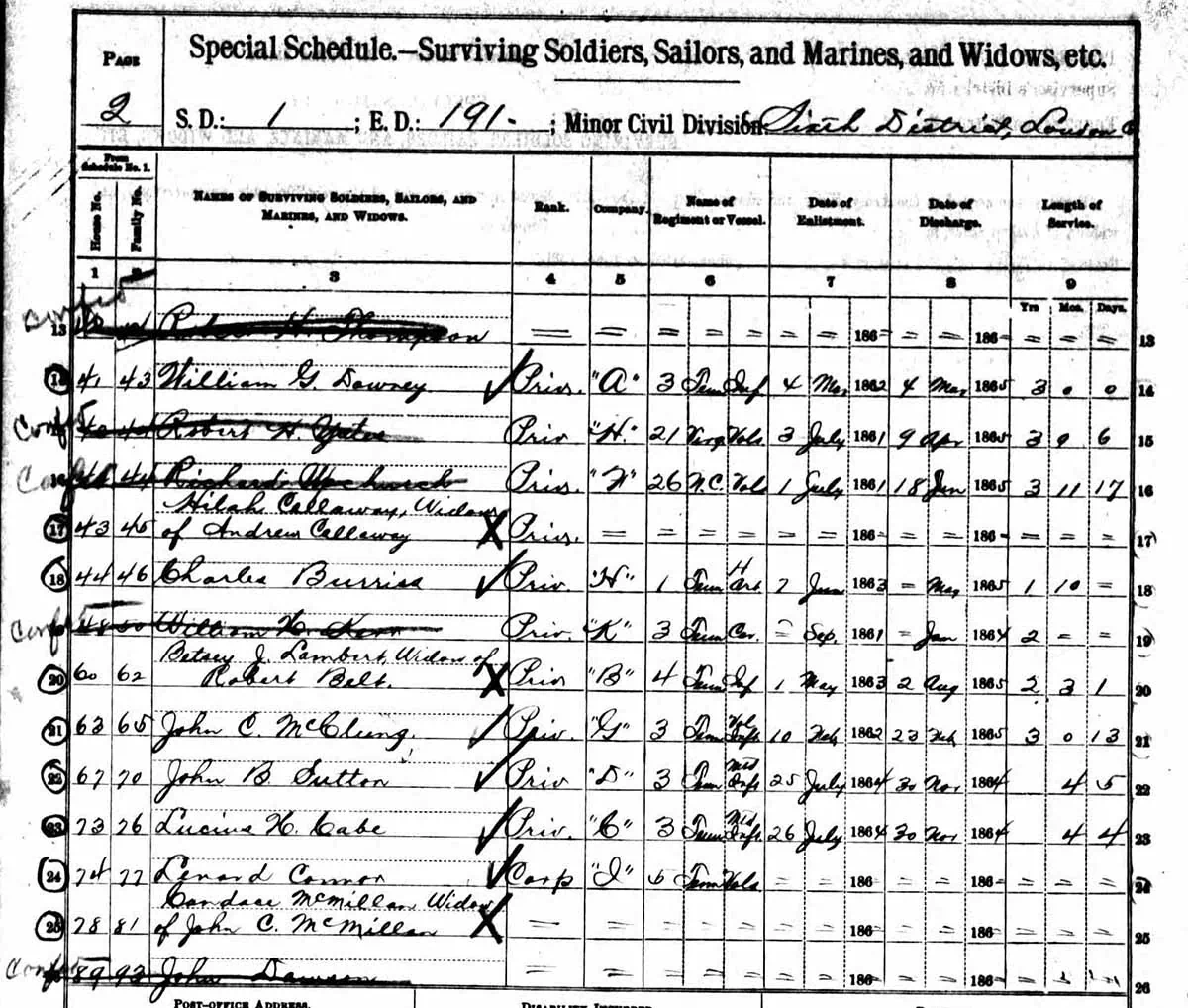
The 1890 Veterans Schedule is also worth checking, with some caveats. The U.S. Pension Office requested this special enumeration primarily to help Union veterans locate comrades who could testify in pension claims. Confederate veterans were generally not included, though a few did appear in the records. Be aware that nearly all schedules for states from Alabama through Kansas were destroyed before being transferred to the National Archives in 1943, and approximately half of the Kentucky schedules were lost as well.
A few Southern states conducted their own special censuses of Confederate veterans: Alabama took three (1907, 1921, and 1927), and Arkansas and Louisiana each conducted one in 1911. All three Alabama Censuses of Confederate Veterans are available online at FamilySearch. The 1907 and 1921 Alabama censuses are available at Ancestry. The 1911 Louisiana Census of Confederate Veterans or their Widows has been partially transcribed at the American History & Genealogy Project.
Other clues. Obituaries, grave markers, family letters and diaries, military papers, veterans reunion ephemera, and lineage society records can all point toward Confederate service. Don’t overlook family stories, either; even if they can’t be verified, they are worth treating as research leads.
Identify the Regiment and Company
Once you’ve identified a likely Confederate ancestor, your next goal is pinning down his regiment and company. This information is the key that unlocks most Confederate records, which are organized by state and unit rather than alphabetically by name.
Civil War Soldiers and Sailors Database. The National Park Service’s Civil War Soldiers and Sailors Database covers over 6 million soldiers who served in both the Union and Confederate armies and has long been the standard starting point for this kind of research. Note: as of early 2025, the NPS is no longer actively maintaining this database. It remains accessible, but it will not be updated going forward.
A strong free alternative is Better Soldiers and Sailors, which draws on the same NPS data but offers improved fuzzy and Soundex name matching (particularly useful when dealing with spelling variations in Confederate records) as well as the ability to export results.
When searching either database, watch for multiple soldiers sharing the same name or initials. Until you can confirm which entry belongs to your ancestor, collect information on all possible candidates and work through a systematic process of elimination.
This may be easier said than done with common names. When researching my own great-great-grandfather, John S. Brown of Greene County, Tennessee, I was looking at thousands of results — John Browns, John S. Browns, and J. S. Browns — across multiple databases. What made it manageable was starting with what I already knew: his approximate location and the time period. From there, it was a matter of methodically gathering information on each candidate and working through the evidence until I could confirm which one was my man. It took time, but the regiment and company information I found ultimately unlocked the rest of his records, including a pension file that confirmed his capture and parole at Vicksburg in July 1863.
Watch for multiple soldiers with the same name or initials. Collect all relevant information and work through it all using a process of elimination.
Ancestry. The Civil War Military Records collection at Ancestry searches a variety of Civil War databases simultaneously and can be a useful supplement, particularly if you already have an Ancestry subscription. Confederate information here can be incomplete, but it’s worth checking.
Locate the Compiled Military Service Record (CMSR)
The Compiled Military Service Record (CMSR) is the foundation of Confederate military research and often the most detailed individual record you’ll find for a soldier. CMSRs for Confederate soldiers were assembled by the U.S. War Department beginning in 1903, using information drawn from original Confederate muster rolls, payrolls, hospital records, prison registers, parole rolls, and inspection reports.
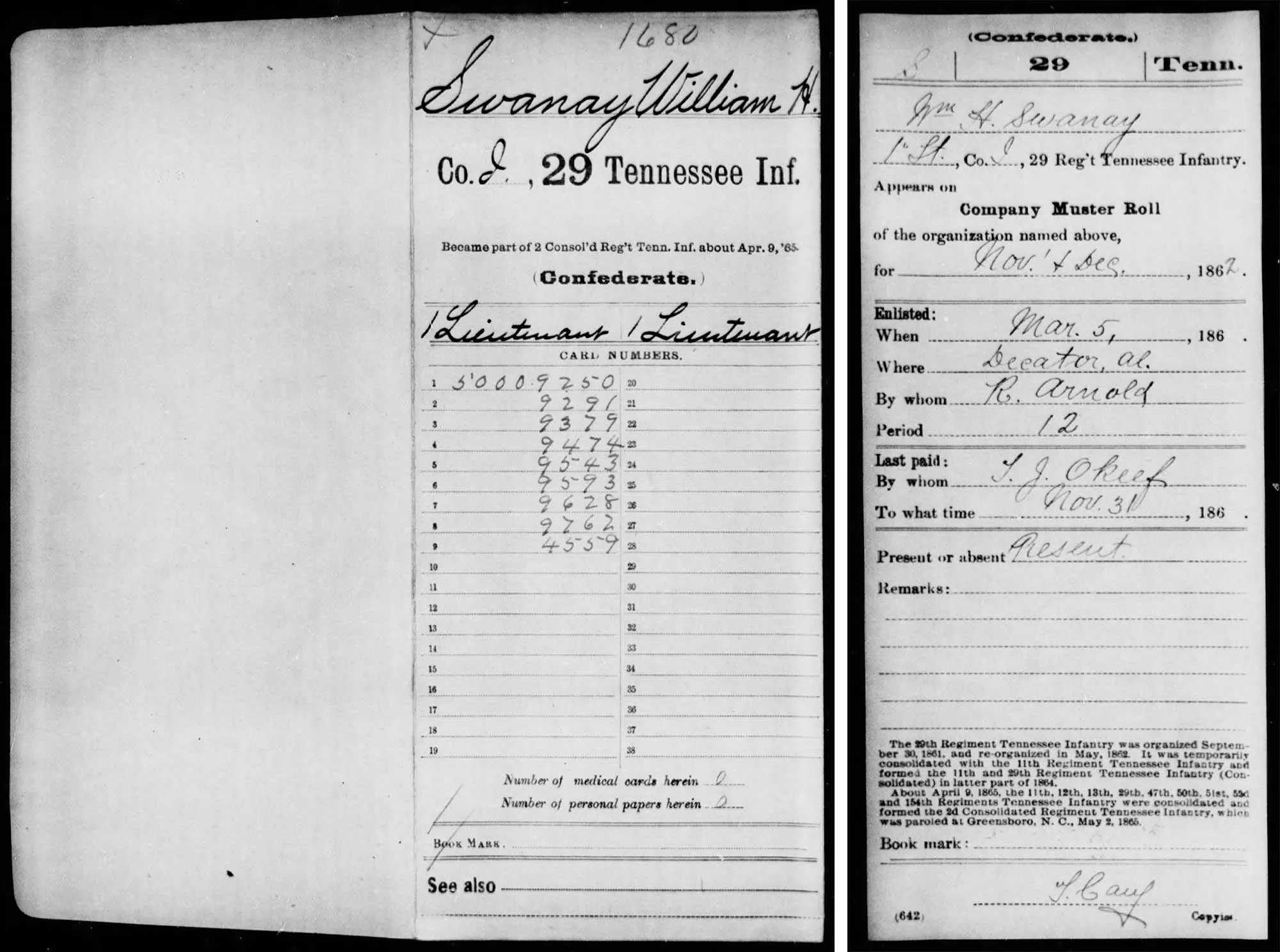
Each CMSR consists of a jacket envelope labeled with the soldier’s name, rank, and unit, containing card abstracts summarizing his service, along with any original documents relating solely to that individual. A CMSR may include rank, unit, date of enlistment, length of service, age, place of birth, physical description, and date of death.
One important caveat: Confederate CMSRs are generally less complete than Union records, as many original Confederate documents were lost or destroyed during the war. It’s also worth checking for cross-reference cards and additional jacket envelopes filed under variant name spellings. Confederate records were often recorded phonetically or inconsistently.
Where to find CMSRs:
- Fold3 – Civil War Confederate Service Records ($) — Arranged by state and unit; full document images available. If you’re doing serious Civil War research, Fold3 access is well worth considering. Many public libraries and family history centers provide free access to patrons.
- FamilySearch – United States Civil War Service Records of Confederate Soldiers, 1861–1865 — Index with links to images.
- Ancestry – U.S., Confederate Soldiers Compiled Service Records, 1861–1865 ($) — Index only, but includes links to digitized files at Fold3.
- FamilySearch Wiki – Confederate Service Records — A comprehensive state-by-state guide to indexes, National Archives microfilm numbers, and links to digitized images.

Confederate Pension Records
Confederate pension records are among the most genealogically rich sources available for this period. Created well after the war, they often capture biographical details — family information, physical descriptions, personal history — that don’t appear in the military records themselves.
Unlike Union veterans, Confederate veterans were not eligible for federal pensions. Pensions were instead administered at the state level, with each state setting its own eligibility requirements and timetables. Alabama was the first state to act, beginning in 1867.
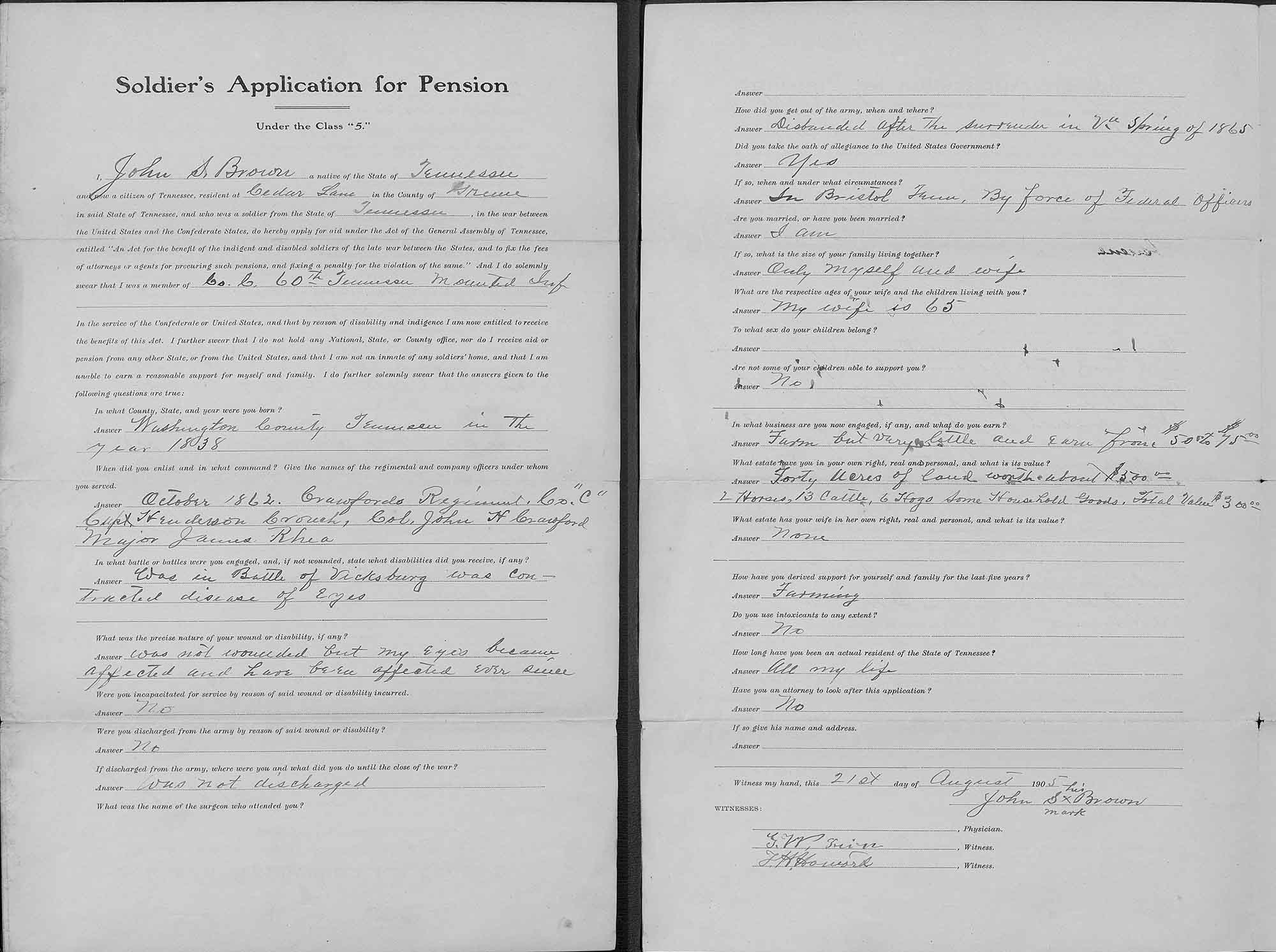
One of the most important things to understand about Confederate pensions is that a soldier applied to the state where he was living at the time of application, not the state where he enlisted or served. If your ancestor enlisted in Virginia but settled in Texas after the war, his pension records will be in Texas, not Virginia. Always establish where your ancestor was living in his later years before you begin searching.
Confederate soldiers applied to the state where they were living at the time of pension application, not the state where they enlisted or served.
Beyond the application itself, pension files often contain letters from the veteran or his widow, testimonials and witness statements from neighbors or fellow soldiers, and documentation of capture or imprisonment.
Where to find Confederate pension records:
- National Archives – List of States’ Confederate Pension Records — A state-by-state directory pointing to the repositories that hold the actual records. The National Archives does not hold Confederate pension records directly.
- FamilySearch Wiki – Confederate Pension Records — State-by-state listing with links to online indexes and digitized images where available.
- Ancestry – Confederate Pension Collections ($) — Digitized pension records for multiple states.
Research the Regiment
Understanding what happened to your ancestor’s regiment — where they traveled, which battles they fought, whether they were captured — is what transforms a name on a muster roll into a fuller human story. Regimental histories can supply this context, though availability varies considerably for Confederate units.
National Park Service – Battle Units Search. The NPS battle units search provides access to unit histories for over 4,000 Union and Confederate regiments. Filter results by Confederacy and state to narrow the list. Note that as of 2025, the NPS is no longer maintaining this database, but the battle units search remains functional.
FamilySearch Wiki – Confederate Regular Troops in the Civil War. The FamilySearch Wiki organizes the same regiment information by name, number, and unit type. Sometimes a different organizational structure is all it takes to find what you were missing.
Civil War Regimental Histories at the Library of Congress. The LOC maintains a research guide to Civil War regimental histories, including links to digitized primary sources. Many regimental histories have also been digitized and are free to read at HathiTrust and the Internet Archive. Search the regiment name to find available copies.
The Civil War in the East. For ancestors who served in the Eastern Theater — southern Pennsylvania to Virginia’s North Carolina border — The Civil War in the East offers detailed unit history timelines of infantry, cavalry, artillery, and other units, organized chronologically.
The War of the Rebellion: Official Records. Known as the “OR,” this 128-volume compilation of Union and Confederate battle reports, correspondence, and orders is indispensable for understanding what a regiment experienced during any given campaign. All 128 volumes are available free at HathiTrust.
Additional Confederate Records to Explore
Beyond the core record types above, several additional sources can add depth to Confederate research.
Confederate Amnesty Papers (1865–1867). After the war, many former Confederates — particularly officers and men of property — were required to apply individually for a presidential pardon. These applications can include the petitioner’s residence, occupation, a description of Confederate service, an oath of allegiance, and character references from neighbors or community leaders. They are especially valuable when service records are incomplete. The free index is available on FamilySearch, with images on Fold3.
Confederate Citizens File (1861–1865). This often-overlooked collection contains over 650,000 vouchers from Southern civilians and businesses that supplied goods and services to the Confederate government. It can help establish context around a soldier’s community and family during the war. Available on Fold3 and indexed on FamilySearch.
Grave markers and headstone applications. Find A Grave is an excellent resource for locating headstone photos and burial information for Confederate soldiers. Also worth checking are the digitized headstone applications for military veterans on Ancestry and FamilySearch. The federal government began providing headstones for Confederate veterans in 1906, and these applications can confirm burial location and service details.
Prison records. If your ancestor’s CMSR indicates he was captured, search the U.S., Civil War Prisoner of War Records, 1861–1865 at Ancestry. Having the regiment and approximate date of capture will be essential for sorting through results with common names.
Casualty reports. Fold3 has digitized over 75,000 Confederate Casualty Reports, a complete collection of casualty lists, statistical summaries, and narrative reports submitted by Confederate units after military engagements.
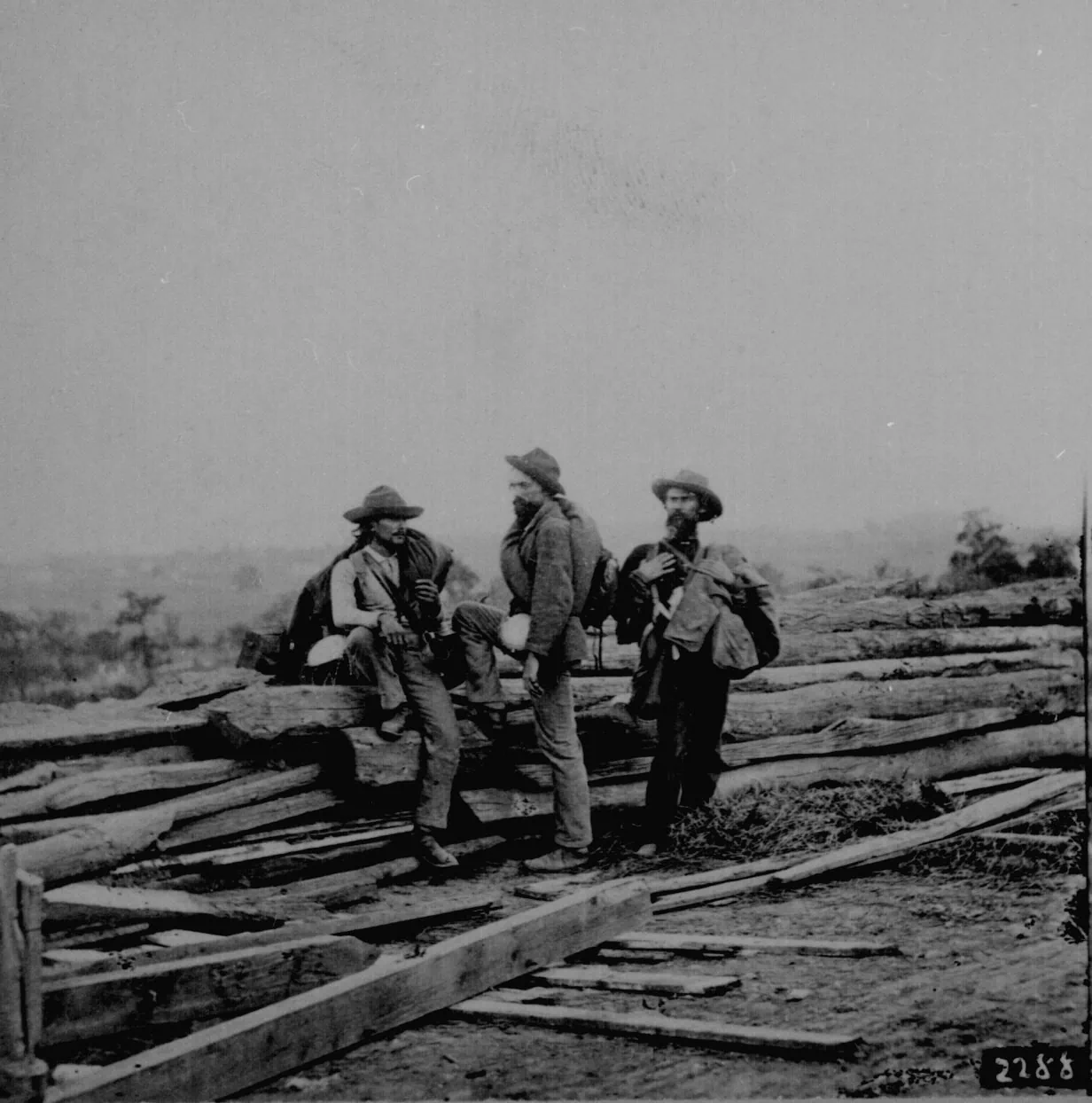
Photographs, diaries, and personal narratives. Confederate photographs are relatively rare, but the National Archives Civil War Photographs collection and Ken Burns’s “The Civil War” at PBS are good places to browse period images. For diaries and personal narratives, Civil War Digital has digitized over 1,600 accounts, all free to view and download.
Old Soldiers’ Home records. If your ancestor survived the war and lived into his later years, he may have spent time in one of the soldier homes maintained by several Southern states. The FamilySearch Wiki for United States Military Old Soldiers Home Records provides a comprehensive state-by-state listing of available records, including links to digitized collections.

Wrap-Up
Researching Confederate ancestors requires patience, a willingness to work across multiple repositories, and an understanding that incomplete records are the norm rather than the exception. But the records do exist, and when you find them, they can add remarkable depth to your understanding of an ancestor’s life.
Start by establishing whether your ancestor likely served, then work methodically: identify the regiment, locate the CMSR, search for a pension, and dig into the regimental history. Each record type may fill in gaps left by the others, and together they can transform a name on a list into a full human story.
Have you researched a Confederate ancestor? Share what records you found most helpful in the comments below.



This post contains affiliate links. I may receive a small commission if you choose to make a purchase, but it does not add anything extra to the price you pay. For more, please read my full Disclosure Statement. I appreciate your support!