
Tracing a Female Ancestor’s Maiden Name: 8 Resources to Break Through Brick Walls
Heart of the Family is a participant in the Amazon Services LLC Associate Programs and other affiliate services. This means that thefamilyheart.com receives a small commission by linking to Amazon.com and other sites at no cost to the readers.
Discovering a female ancestor’s maiden name is one of genealogy’s most common and most frustrating brick walls. Women have historically been underrepresented in the historical record, and a name change at marriage (sometimes more than once) can make the trail nearly impossible to follow.
The good news? More resources are available today than ever before. Below are 8 of the best places to search for a female ancestor’s maiden name, from traditional records to modern DNA tools.
The Complex Search for Maiden Names
Why is it so hard to research our female ancestors? When a woman married, she typically gave up her maiden name (also called her birth surname) to take her husband’s surname. If she married more than once, you may need to work through multiple surnames before getting back to the one she was born with.
Beyond name changes, early laws prevented women from owning land and property, meaning most female ancestors generated far fewer records than their male counterparts — leaving us with less to work with from the start.
So where do you begin? While there are different philosophies for researching women, here is my approach: start with the records your ancestor generated herself during her lifetime, such as marriage, census, death, and burial records. Then branch out to records created by her husband, children, and other family members, including land, military, and probate records.
Where to Search for a Female Ancestor’s Maiden Name
Here are some of my favorite record sets for tracking down a female ancestor’s maiden name or birth surname.
Marriage Records
The most obvious place to look for a female ancestor’s maiden name is her marriage record. Marriage records include licenses, registers, banns, and certificates, and are often more widely available than other types of vital records, especially before states began requiring birth and death registrations.
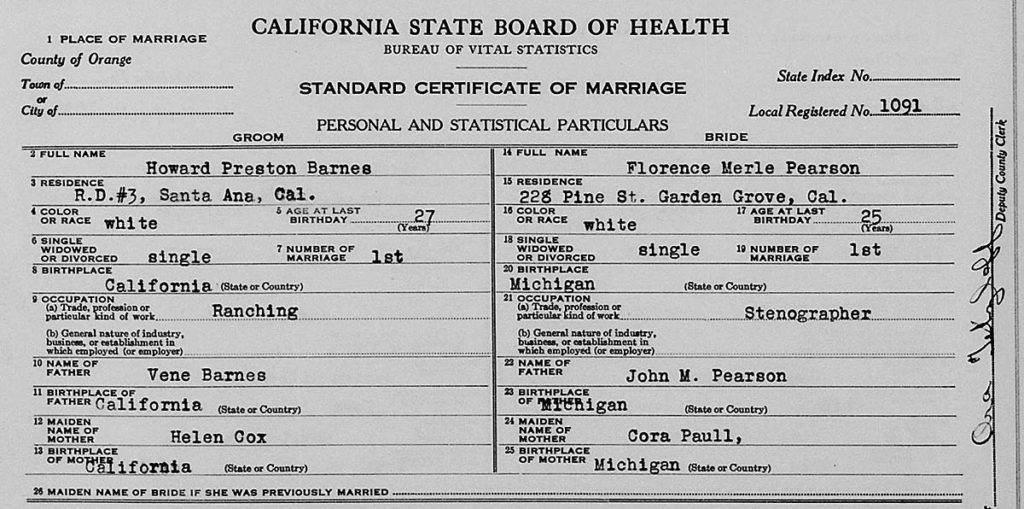
Both the bride and groom listed their names and places of residence, and parents are often listed as well. If either party was below the legal age to marry, a parent or guardian would sign a notice giving parental consent to the marriage.
Keep in mind that the bride may have had a previously unknown marriage and might not be using her maiden name on the record you are examining. If parents are not listed, check the surnames of witnesses, as they could be siblings or other relatives of the bride.
Also, check the marriage records of your ancestor’s children. You may find her listed as a parent, which could reveal her maiden name.
Did your ancestor divorce? In some cases, particularly if she had no children, a woman may have elected to have her maiden name restored. If so, her birth surname should be stated in the divorce paperwork.
Here are a few places to find marriage records online:
- Ancestry Marriage Records
- FamilySearch Marriage Records (free)
- Findmypast Marriage Records
- MyHeritage Marriage Records
Death Records
If your female ancestor died after death registrations were required in her state, you should be able to find a death certificate for her.
Assuming the informant (the person who provided information for the death certificate) knew the names of your ancestor’s parents, you may be able to find her father’s name listed on the certificate. In most cases, the father’s surname will be your ancestor’s maiden name.

Be sure to investigate the informant to determine their relationship to your female ancestor. Information tends to be more accurate when provided by a close family member rather than a funeral director or another stranger to the family.
If the informant shares a surname with your ancestor, they could be a sibling, child, or other relative — providing yet another clue to your ancestor’s maiden name. This is particularly helpful when the parents’ names are not listed on the death certificate.
Once you have identified your female ancestor’s children, obtain copies of their death certificates as well. This is especially helpful if your ancestor died before death registrations were required in her state.
One important caveat: always verify the accuracy of information on a death certificate. I can tell you from personal experience that grief makes it difficult to remember even basic family details. When my mother passed, I struggled to recall her parents’ names and birth date… and I’m a genealogist. Thankfully, my genealogy database saved me. Informants of the past weren’t so lucky.
Cemetery & Burial Records
If a woman’s maiden name is not listed on her death certificate, cemetery and burial records are a natural next step.
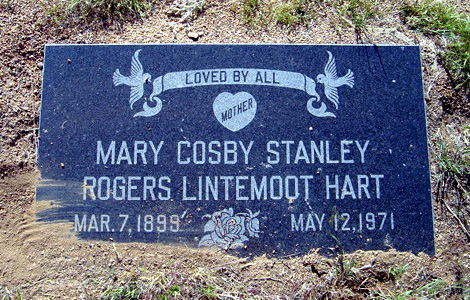
While not common, some grave markers list a woman’s maiden name in addition to her married name, so it’s always worth a look. Take note of the surrounding markers as well. Your ancestor’s parents or siblings may be buried in nearby plots, and the names of those “neighbors” could provide valuable clues.
If the cemetery has a church or office, ask to see the burial records for your ancestor. Depending on the time period, there may be a wealth of family history information in those records. Request access to grave books, plot books, maps, and any other records the office will allow you to view.
Cemetery records may also include the name of the funeral home that handled your ancestor’s burial. If that funeral home is still in business, it’s worth reaching out to ask if they have additional records on file. Funeral home records typically contain much of the same information found on death certificates — date and place of birth and death, current residence, spouse’s name, parents’ names, and the informant’s name. These records may also include the cost and description of the casket and other details of the funeral, as well as the name of the newspaper that published the obituary.
Here are a few places to search for cemetery records online:
Newspapers
Newspapers are an underutilized resource for researching a female ancestor’s maiden name. Items to look for include articles about engagements, marriages, anniversaries, divorces, illnesses, and deaths. Don’t overlook the social columns either, which often noted who came to visit or whom your ancestor visited.
Search for engagement announcements a few weeks or months before the date of the wedding, and look for marriage and wedding announcements up to several weeks following the marriage.
Your female ancestor’s obituary may include her maiden name, her parents’ names, and the names of surviving siblings. If female siblings are listed by their married names, research their marriages to see if you can trace back to a shared maiden name. Your ancestor’s spouse’s obituary may also include useful details about their marriage.
Here are a few places to search for newspapers online:
- Newspapers.com
- NewspaperArchive
- GenealogyBank
- Findmypast Newspaper Collection
- MyHeritage Old News
- Chronicling America (free)
Military Pension Records
If your female ancestor’s spouse served in the military, military pension records are well worth searching. Veterans, as well as their widows, parents, and minor dependents, were eligible to apply for pensions under certain conditions, and each was required to file a detailed application.
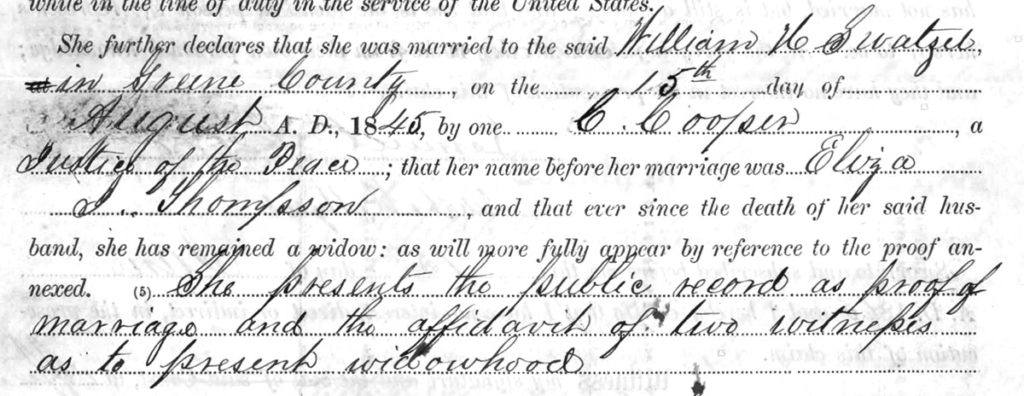
Widows needed to supply proof of their marriage to the veteran, so you may find a marriage certificate, notarized statement from the court, or testimony from one or more witnesses to the marriage included in a widow’s file.
A minor’s pension application may also contain information about the parents’ marriage. While a marriage certificate is unlikely to be found, the parents’ names, including the mother’s maiden name, might be mentioned in order to prove the parentage of the children.
Note that military record availability and access vary by country, so be sure to research the relevant national archives for your ancestor’s country of service.
Here are a few places to search for military pension records:
- National Archives (NARA) — many records are free to access
- Fold3
- Ancestry Military Records
- FamilySearch Military Records (free)
- MyHeritage Military Records
Search for military records at Fold3.com.
Land & Probate Records
If you have identified potential candidates for your female ancestor’s parents, check to see if they left any land or probate records. Towards the end of their lives, they may have begun dividing up the family property and could have left something to your ancestor. Search deed indexes for the area where you think your ancestor grew up to see if any familiar names appear.
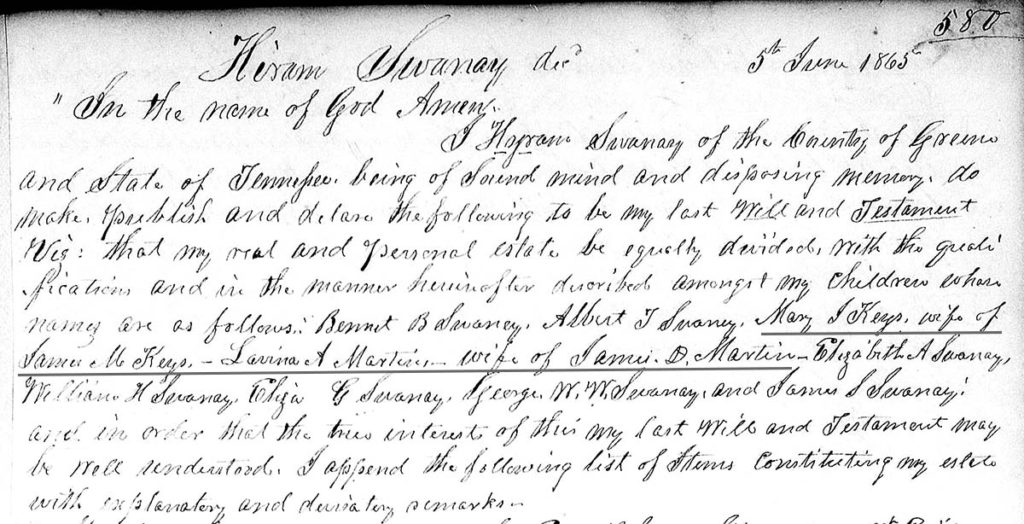
When property was left to a married woman, she was typically named in the manner of “Susan, wife of John Williams.” Since you already know your ancestor’s married surname, this can help you confirm whether you have found the right person.
Probate records, such as wills, are also worth a close look. A parent’s will may name your female ancestor directly, sometimes including her married name alongside her birth surname. On the other hand, if she is listed only by her married name, you will at least have confirmation of the family connection to investigate further.
Land deeds transferred to a wife after the death of her husband sometimes included her maiden name, so be sure to search for those as well.
Census Records
Census records are a surprisingly rich source of clues for finding a female ancestor’s maiden name.
U.S. censuses from 1850 to 1870 list the names of every member of the household. Is there an older member of the household with a different surname? That person could be the wife’s parent. Younger family members with different surnames might be her siblings.
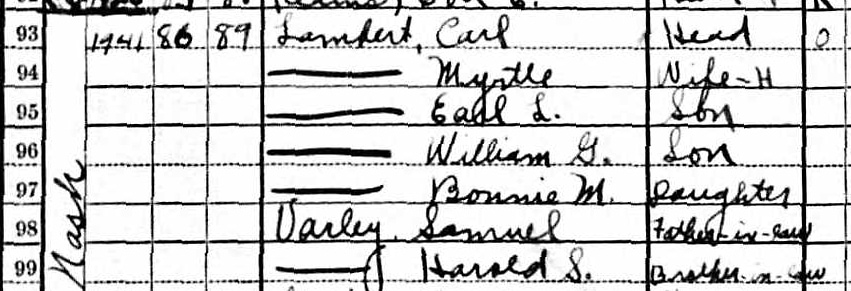
U.S. censuses from 1880 forward list each family member’s relationship to the head of household. Anyone listed as an in-law would likely be the wife’s parent, assuming her husband is the head of household.
Keep in mind that a female parent living in the household may have remarried and might not be using the surname that would be your ancestor’s maiden name. You will need to research that individual to rule out any additional marriages.
One of the most overlooked strategies in census research is a close look at the neighbors. Your female ancestor may not have moved far from where she grew up, and her parents or siblings could be living just down the road. Are any of her neighbors the right age to be her parents? Do any neighboring surnames match one of her children’s middle names? These details are easy to miss but can open up entirely new lines of research.
Finally, take note of any possible relatives identified in census records and follow up to confirm the relationship.
Genetic Genealogy (DNA)
Genetic genealogy has transformed genealogy research over the past decade and can be a powerful tool for identifying a female ancestor’s maiden name, particularly when traditional records are unavailable or incomplete.
When a female ancestor’s paper trail runs cold, her living descendants can take an autosomal DNA test and compare results with other matches. By grouping DNA matches into family clusters and analyzing the surnames associated with each cluster, it is sometimes possible to identify the maiden name of an ancestor several generations back. X-DNA, which follows a unique inheritance pattern, can also help narrow down which family lines to focus on.
Y-DNA testing can also be useful in certain situations. Since Y-DNA is passed down virtually unchanged from father to son, male descendants of your female ancestor’s father may carry a Y-DNA signature that points directly to her birth surname.
Visit our SHOP page for the best deals on DNA kits.
Wrap-Up
A woman’s name changes after marriage, combined with a historical lack of records generated in her own name, can make the search for a female ancestor’s maiden name a complicated and sometimes frustrating task.
The good news is that there are more resources available today than ever before. From traditional records such as marriage certificates, death certificates, and census records to modern tools like genetic genealogy, each resource offers a new angle of approach. Examining the records she generated, as well as those left by her husband and other family members, can sometimes reveal not only her maiden name but a brand-new branch to add to your family tree.
What are your favorite places to search for a female ancestor’s maiden name? Leave a note in the comments!


This post contains affiliate links. I may receive a small commission if you choose to make a purchase, but it does not add anything extra to the price you pay. For more, please read my full Disclosure Statement. I appreciate your support!









These are great suggestions. I have found female ancestors’ maiden names in all of these sources. Sometimes, if a first name is unusual, it’s possible to do a first-name-only search in a census or other index in the town where she lived — especially if she remained there her entire life — and come up with some leads to follow.
That’s true, Molly. I’ve had some good results with unusual first-name searches, as well. Unfortunately, most of my ancestors were named “Mary” or “Sarah” so I can’t use that trick very often! 🙂
I’ve been amazed that more than a few obits and gravestones list maiden names, even in first half of 20th century. Lots of great ideas here. TY for sharing!
Great tips. Court records are another place I’ve had some success. Family squabbles, witnesses, etc. might all be people related to the female.
Oooh, yes, Linda! Those family squabbles make the best records!
As always, excellent ideas! I’ve had some success using all of the sources you mentioned.
Thank you, Marian! 🙂