
Beyond The Draft Card: 8 Military Records That Tell the Real Story
Heart of the Family is a participant in the Amazon Services LLC Associate Programs and other affiliate services. This means that thefamilyheart.com receives a small commission by linking to Amazon.com and other sites at no cost to the readers.
If you’ve spent any time researching your family tree, there’s a good chance you’ve come across a draft registration card, a name on a muster roll, or a line in a census that says “veteran.” When that happens, your ancestor’s military service suddenly becomes real. It’s an exciting moment, but for many researchers, that’s also where the trail stops.
Draft cards and basic service records are starting points, not destinations. The real stories of your ancestors’ military experience are buried in records that many genealogists never think to request. Pension applications filled with sworn testimony from aging veterans. Court-martial transcripts with page after page of firsthand accounts. Hospital registers that document the day-to-day reality of wartime illness and injury. These records exist across nearly every American conflict, from the Revolutionary War through the twentieth century, and they are waiting to be found.
In this post, I’ll walk you through eight military record types that go beyond the draft card. Whether your ancestor served in the American Revolution or World War II, these records can transform a name and a rank into a full human story.
I learned this firsthand through the widow’s pension file for my ancestor William Swatzel, a Civil War soldier who was captured and died at Andersonville prison. It was my first experience uncovering an ancestor’s truly tragic end, and it changed the way I approach military research.
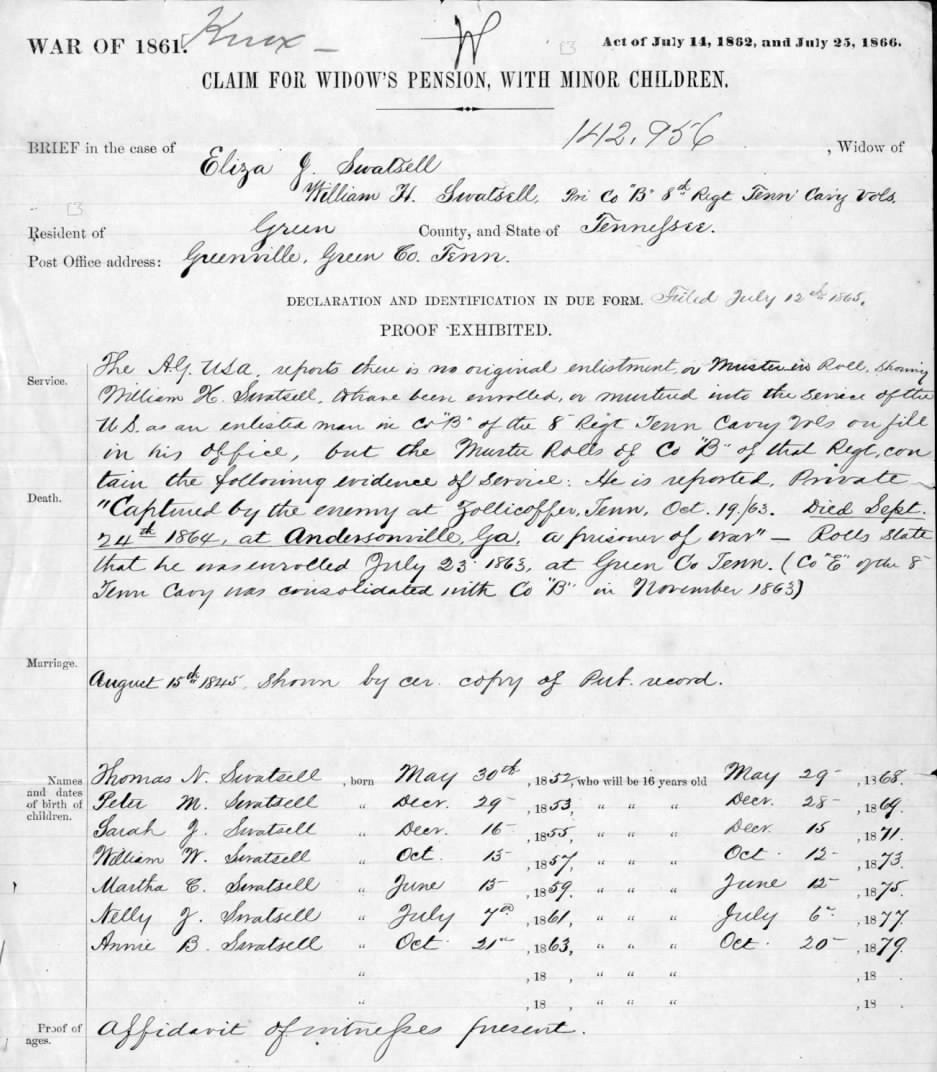
Image from author’s files (not digitized).
1. Pension Files
If you could request only one type of military record for an ancestor, make it the pension file. No other record type comes close in terms of genealogical value.
Military pensions were government benefits paid to veterans (or their widows or dependents) for service or service-related disability. To qualify, applicants had to prove their identity, service, and, often, financial need and disability. That burden of proof is exactly what makes these files so valuable to us today. A single pension file can contain sworn depositions from the veteran himself, testimony from neighbors and fellow soldiers, marriage and birth records submitted as evidence, physical descriptions, details about injuries or illness, and sometimes deeply personal accounts of daily life before and after the war.
Widow’s pension applications are often even richer in details. Because a widow had to prove both her husband’s service and her marriage, these files frequently include family Bible pages, marriage certificates, affidavits from witnesses to the wedding, and statements about children and their birthdates. For researchers tracing women who are otherwise difficult to find in the records, widows’ pensions can be a breakthrough source.
Minor’s pensions are another valuable but often overlooked category. When a veteran died and his widow either remarried or passed away, his minor children could apply for his pension in their own right. These files may contain evidence of the children’s ages, guardianship records, and documentation of the family’s circumstances after the veteran’s death. Because the applicant was a child, the file often includes affidavits from relatives, neighbors, or community members who could attest to the family’s situation, adding layers of detail about the household that you won’t find in the veteran’s original service records.
Pension files are valuable even when the claim was rejected. Bennet Bradford Swanay, one of my collateral ancestors, enlisted as a Union soldier but was sent home the same day because they didn’t need him to report yet. He was killed by Confederate troops on his way home. When his wife applied for a widow’s pension, there was no record of his having served, and her claim was rejected. After her death, their daughter applied for a minor’s pension and was also rejected for the same reason. It took an Act of Congress to get Bennet placed on the rolls, but by then, it was too late. Though no family member ever received his pension, the paperwork generated by those applications and appeals contains details about Bennet and his family that exist nowhere else. So, don’t assume a rejected pension means an empty file.
Pension files exist for conflicts from the Revolutionary War through the early twentieth century, though availability and content vary by era.
Where to look:
- Start with the pension indexes on FamilySearch and Fold3 to confirm a file exists, then request the full file from the National Archives (NARA) if it hasn’t been digitized. Many pension files run dozens or even hundreds of pages, and the indexes only scratch the surface.
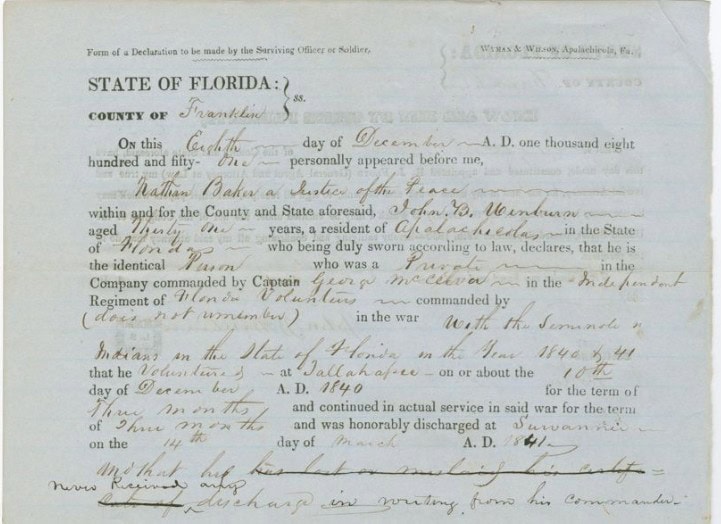
- Original pension files for the Revolutionary War and War of 1812 are held at NARA and have been digitized on Fold3 (the War of 1812 pensions are free to access thanks to the Preserve the Pensions project). See Pre-World War I U.S. Army Pension and Bounty Land Applications for more about NARA’s pension holdings.
- Some Revolutionary War pensions are digitized (free) on the NARA website.
- Civil War Union pensions are also held at NARA, with indexes available on FamilySearch, Ancestry, and Fold3. Some Widow’s Pensions are available on Fold3, but to date, this collection is only 22% complete.
- Civil War Confederate pensions were administered at the state level, so you’ll need to check the archives in the state where the veteran applied, which was typically where he lived after the war rather than where he enlisted.
2. Bounty Land Warrant Applications
Before the Civil War, the federal government rewarded military service with land. Soldiers who served in conflicts from the Revolutionary War through the Mexican-American War (and their heirs) could apply for bounty land warrants, which entitled them to free acreage on the public domain. The practice ended in 1855, so these records are limited to earlier conflicts, but for researchers working in that era, they can be just as revealing as pension files.
Like pensions, bounty land applications required proof of service. A veteran had to establish his identity, the dates and nature of his service, and his entitlement to the number of acres claimed. That means these files can contain sworn affidavits, physical descriptions, details about when and where the applicant served, and sometimes testimony from fellow soldiers. When a widow or heir filed the claim, you may also find marriage records, death records, and evidence of family relationships.
What makes bounty land warrants especially useful is that they often capture veterans at a different point in their lives than pension records do. A veteran might apply for his land warrant shortly after the war while still relatively young, then file for a pension decades later in old age. The two files together can bracket an entire adult life.
One important detail: receiving a bounty land warrant doesn’t necessarily mean the veteran moved to the land. Many veterans sold their warrants to speculators rather than relocating. So the land described in the warrant may have no connection to where your ancestor actually lived. The genealogical value is in the application, not the acreage.
There’s exciting news on the access front. The National Genealogical Society’s Veteran Bounty Land Records (VBLR) Project, launched in 2023 in collaboration with NARA, FamilySearch, and the Daughters of the American Revolution, is working to digitize more than 360,000 bounty land warrant application files from the Revolutionary War through the Mexican-American War. Many of these files have never been available online. The project has raised over $1 million toward its $2.5 million goal, and when complete, the records will be freely accessible to the public, unlocking files that previously required an in-person visit to the National Archives or a mail-order request.
Where to look:
- Revolutionary War bounty land applications are typically found merged with pension files and have been digitized on Fold3.
- Indexes are available on Ancestry, Fold3, and FamilySearch.
- The full application files are held at NARA, and many are not yet digitized. Search the “Bounty Land Warrant Application Files, ca. 1800–ca. 1900” database to see what is available, but be sure to check back for updates.
If your ancestor served in any conflict before 1856, it’s worth checking whether a bounty land file exists, even if you’ve already found a pension.
3. Court-Martial Records
Court-martial records are among the most underused resources in military genealogy and among the most fascinating. These are the records of military trials, proceedings brought against soldiers and sailors for offenses ranging from desertion and insubordination to theft, drunkenness, and sleeping on guard duty. They are rich in narrative detail because they follow a trial format, complete with charges, witness testimony, cross-examination, and verdicts.
For genealogists, the value lies in the testimony. Witnesses and the accused often described the circumstances of daily military life in ways that no other record captures. You may find details about where a soldier was stationed, who he served alongside, what conditions were like in camp, and what led to the incident in question. In some cases, character witnesses offered personal details about the soldier’s background, family, or reputation. These are the kinds of firsthand accounts that bring an ancestor’s service to life in ways a muster roll never could.
Don’t assume that a court-martial means your ancestor was a troublemaker. Desertion, the most common charge, was frequently the result of a soldier leaving to check on his family or harvest crops with the intention of returning. Context matters, and the records themselves often supply it.
Court-martial records exist for conflicts from the Revolutionary War forward, though the volume and level of detail increase significantly starting with the Civil War. Earlier records tend to be sparse, while twentieth-century cases can be quite extensive.
Where to look:
- Historic court-martial case files (pre-WWI) are held at NARA, primarily in Record Group 153 (Office of the Judge Advocate General). Prior to 1812, the records are fragmentary and incomplete. A few files have been digitized.
- For Navy court-martial records, check “US, Navy Courts Martial Records, 1799-1867” on Fold3.
- FamilySearch has digitized images of “Proceedings of U.S. Army courts-martial and military commissions of Union soldiers executed by U.S. military authorities, 1861-1866.” For Confederate court-martials, check the state archives in the soldier’s state of service.
- Records from World War I to the present may be requested from the National Archives at St. Louis.
4. Unit and Regimental Histories
Military records can tell you that your ancestor served, but unit and regimental histories can tell you what he may have experienced. These published and manuscript accounts trace a unit’s movements, engagements, camp locations, casualties, and daily life from mustering in through discharge. When you know your ancestor’s regiment, you can reconstruct the arc of his wartime experience even if his individual records are slim.
Regimental histories come in many forms. Some are full-length books written by veterans or military historians. Others are brief summaries compiled by state adjutant generals or the War Department. Some exist only as unpublished manuscripts or as entries in larger reference works. The quality and depth vary enormously, but even a bare-bones unit history can tell you which battles your ancestor’s regiment fought in, where they marched, and how many men were lost along the way.
These histories are especially important when individual service records are thin or missing. If your ancestor’s compiled military service record is a single index card (which is common for War of 1812 and some Civil War soldiers), the regimental history may be the only source that puts his service into context. Knowing that his regiment spent the winter of 1864 entrenched outside Petersburg, or that his company was at Horseshoe Bend, gives you a story to tell that the service record alone cannot provide.
Where to look:
- The National Park Service’s Battle Units database covers more than 4,000 Union and Confederate regiments.
- State adjutant general reports, many of which have been digitized on Google Books, HathiTrust, and the Internet Archive, are another valuable source.
- FamilySearch Wiki pages organized by state and conflict can point you to both published and manuscript histories.
- For twentieth-century conflicts, the U.S. Army Center of Military History publishes unit histories and campaign summaries online.
- State archives and local historical societies may also hold unpublished unit histories or soldier diaries that haven’t been digitized.
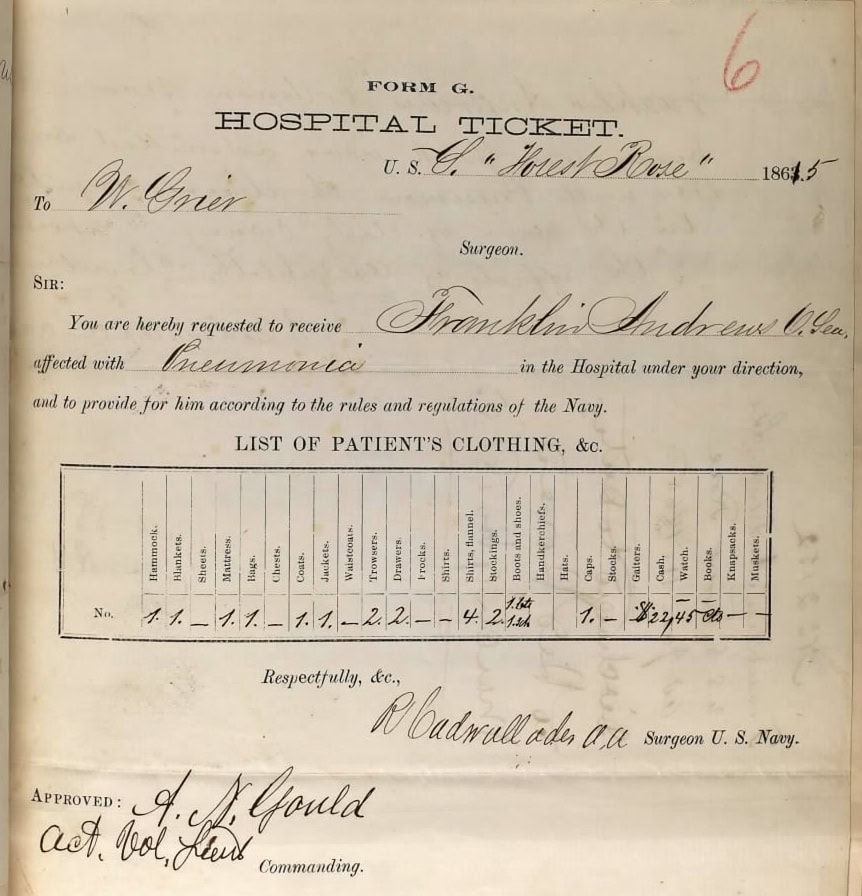
5. Military Hospital Records
For many soldiers, the defining experience of their service wasn’t a battle. It was an illness or an injury. Military hospital records document these experiences in detail, and they often survive where other records do not.
Hospital records vary by era, but Civil War-era registers are particularly extensive. The Union Army maintained carded medical records that abstracted information from hospital registers, prescription books, and surgical reports. These cards may include the soldier’s name, rank, regiment, diagnosis, treatment, date of admission, and outcome, whether that was a return to duty, a discharge for disability, or death. For ancestors who were wounded or who suffered from chronic illness during their service, these records can explain gaps in service, the reason for a discharge, or the basis for a later pension claim.
Don’t overlook these records for ancestors who seem to have served without incident. Disease killed more soldiers than combat in every American conflict through the Spanish-American War. If your ancestor was hospitalized for typhoid, dysentery, or malaria, there may be a medical record documenting it, even if he recovered and returned to his unit.
Where to look:
- Carded Medical Records for Soldiers in the U.S. Army, 1821–1912, are held at NARA.
- Medical records for Confederate Civil War soldiers are in their service records, which are digitized on Fold3.
- “US, Naval Hospital Tickets and Case Papers, 1825–1889” (Fold3) is a collection of U.S. Navy hospital tickets, medical case papers, and similar documents dating from the early to late 19th century.
- Did your ancestor work in a Civil War-era hospital facility? FamilySearch offers a finding aid to these records, which are held at NARA: “United States, National Archives, Carded Service Records of Hospital Attendants, Matrons and Nurses, 1861–1865.”
- “U.S., World War II Hospital Admission Card Files, 1942–1954,” (Ancestry) contains mostly records of U.S. Army personnel wounded in battle during World War II and the Korean War.
- For twentieth-century conflicts, medical records can be requested through the National Personnel Records Center (NPRC) in St. Louis, though the 1973 fire destroyed a significant number of Army records from 1912 to 1964.
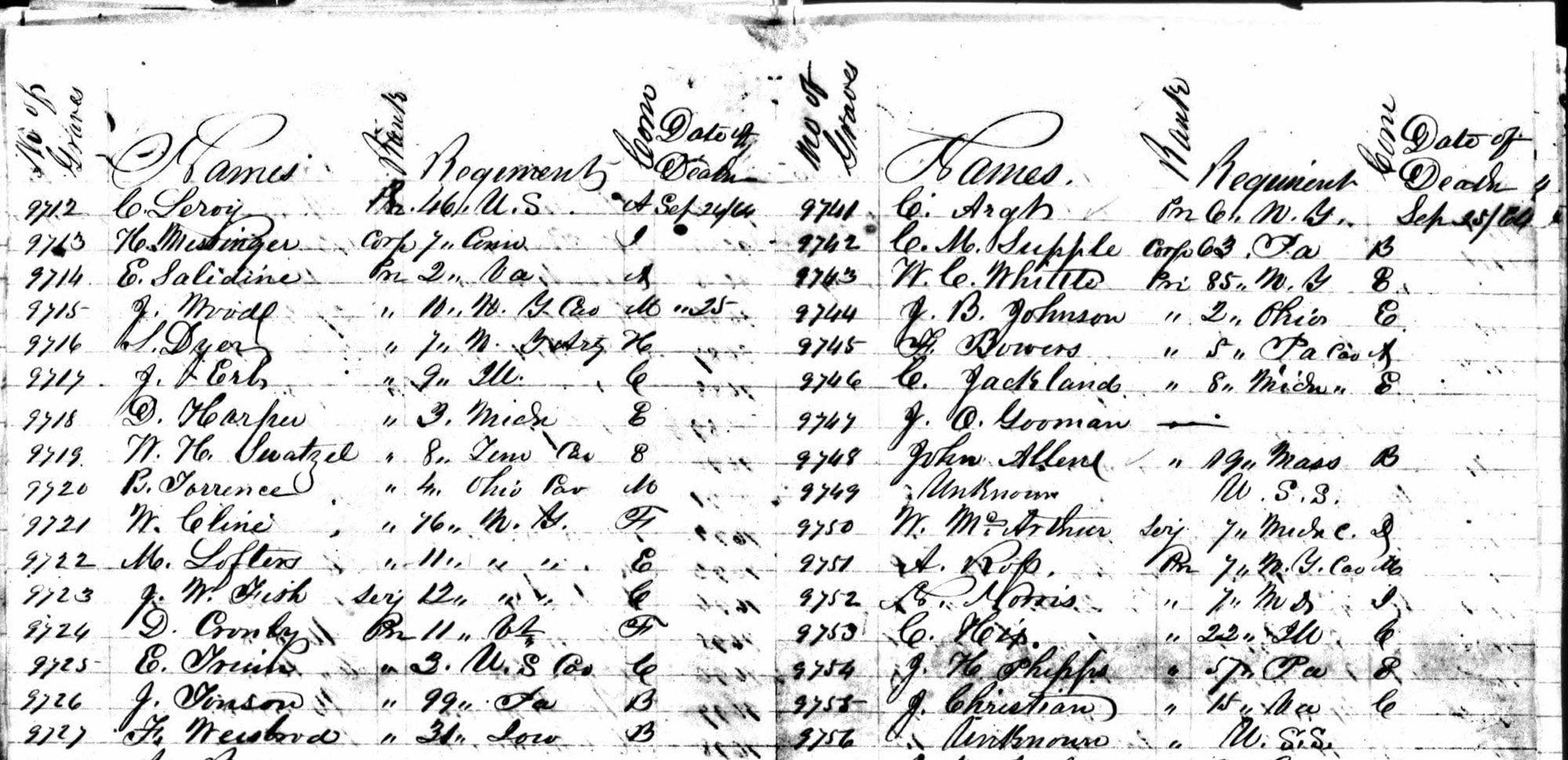
6. Prisoner of War Records
Prisoner of war records are among the most poignant documents in military genealogy. Civil War prison camps like Andersonville (Camp Sumter), Elmira, and Point Lookout generated rolls, registers, and death records that account for thousands of soldiers on both sides. These records typically include the soldier’s name, rank, regiment, date of capture, date of arrival at the prison, and, in far too many cases, the date and cause of death. Some prison records also document exchanges, paroles, and escapes.
For twentieth-century conflicts, POW records become more detailed. World War II and Korean War POW records may include interrogation reports, repatriation documents, and debriefing statements. These files can contain personal details and narrative accounts that are difficult to find elsewhere.
Even if you don’t know whether your ancestor was captured, it’s worth checking. Many families never knew the full circumstances of a soldier’s death or captivity, and the records sometimes tell a very different story from what was passed down through oral tradition.
Where to look:
- The Andersonville National Historic Site maintains an onsite searchable database of prisoners. Browsable images are available at FamilySearch, and indexes are available at Ancestry. FamilySearch also has a digitized version of Atwater report: list of prisoners who died in 1864–65 at Andersonville Prison.
- The Civil War Soldiers and Sailors System has information about Fort McHenry, which imprisoned 15,000+ Confederate soldiers, and about Andersonville.
- Civil War Prisons has a searchable database of Union prisoners interned at Andersonville and Cahaba Prisons, as well as those aboard the Sultana.
- Original Civil War POW records are held at NARA, with some indexes on Fold3 and Ancestry. FamilySearch has finding aids for Union POW records and Confederate POW records.
- For World War II and later conflicts, POW records can be requested through the NPRC. FamilySearch has a finding aid for these records.
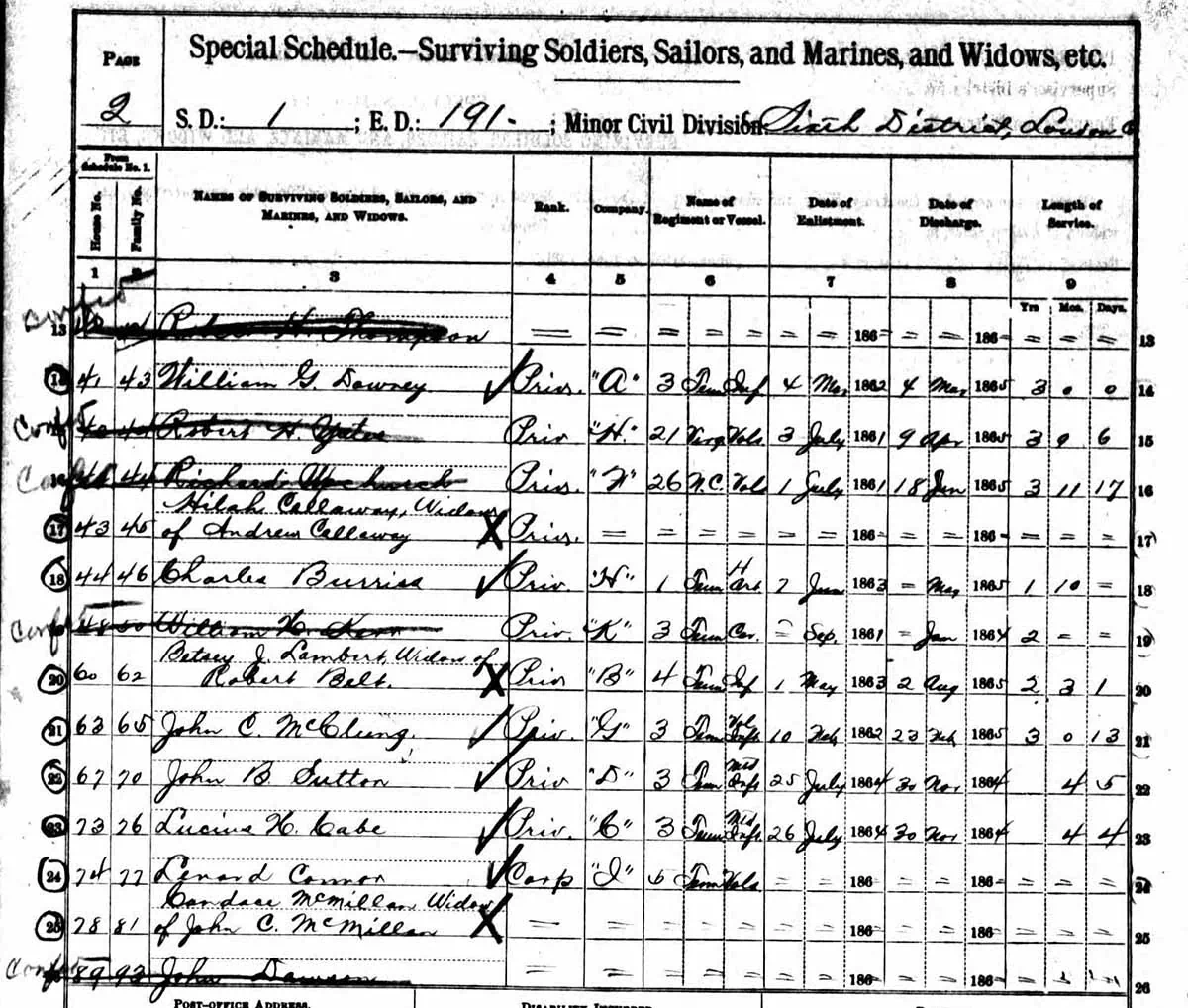
7. Veterans’ Census Schedules and Enumerations
Most genealogists are familiar with the federal census, but many don’t realize that certain census years included special schedules specifically for veterans. These enumerations may confirm military service, identify which conflict an ancestor served in, and provide details that the standard population schedule does not.
The earliest federal effort to enumerate veterans through the census came in 1840, when enumerators were required to record the names and ages of all Revolutionary War and other military service pensioners living in each household. Because the standard 1840 census listed only the head of household by name, this pensioners’ schedule is notable for naming individuals who may otherwise appear only as tick marks in an age column. The schedule also records the head of household with whom the pensioner was residing, which may reveal family relationships and migration patterns. Approximately 25,000 pensioners were listed.
The most well-known veterans’ enumeration, however, is the 1890 Veterans Schedule, a special enumeration of Union veterans and their widows conducted alongside the 1890 federal census. While the vast majority of the 1890 population census was destroyed in a fire, a substantial portion of the Veterans Schedule survived for the states, alphabetically, from Kentucky through Wyoming. The surviving schedules record the veteran’s name, rank, company, regiment, dates of enlistment and discharge, length of service, and any disability. For researchers who “lost” an ancestor in the 1890 census gap, the Veterans Schedule may be the only federal record placing him in a specific location that year.
Beyond 1890, several other census years touched on military service. The 1910 census asked whether a person was a survivor of the Union or Confederate Army or Navy. The 1930 census recorded a veteran’s war of service and military branch. Many state censuses included their own questions on military service. These entries won’t provide the depth of a pension file, but they may confirm service, identify the conflict, and point you to more detailed records.
When searching, keep in mind that census enumerators sometimes recorded military details inaccurately, so treat these entries as clues to verify against service and pension records.
Where to look:
- The 1840 Revolutionary War Pensioner Census is available at The U.S. Census Bureau, Ancestry (searchable index), FamilySearch, and The Internet Archive.
- The 1890 Veterans Schedule is available on Ancestry and FamilySearch.
- For state censuses, check the FamilySearch Wiki pages, organized by state, as availability and content vary widely.
- The 1910 and 1930 federal census records are available on Ancestry, FamilySearch, MyHeritage, and other major platforms.
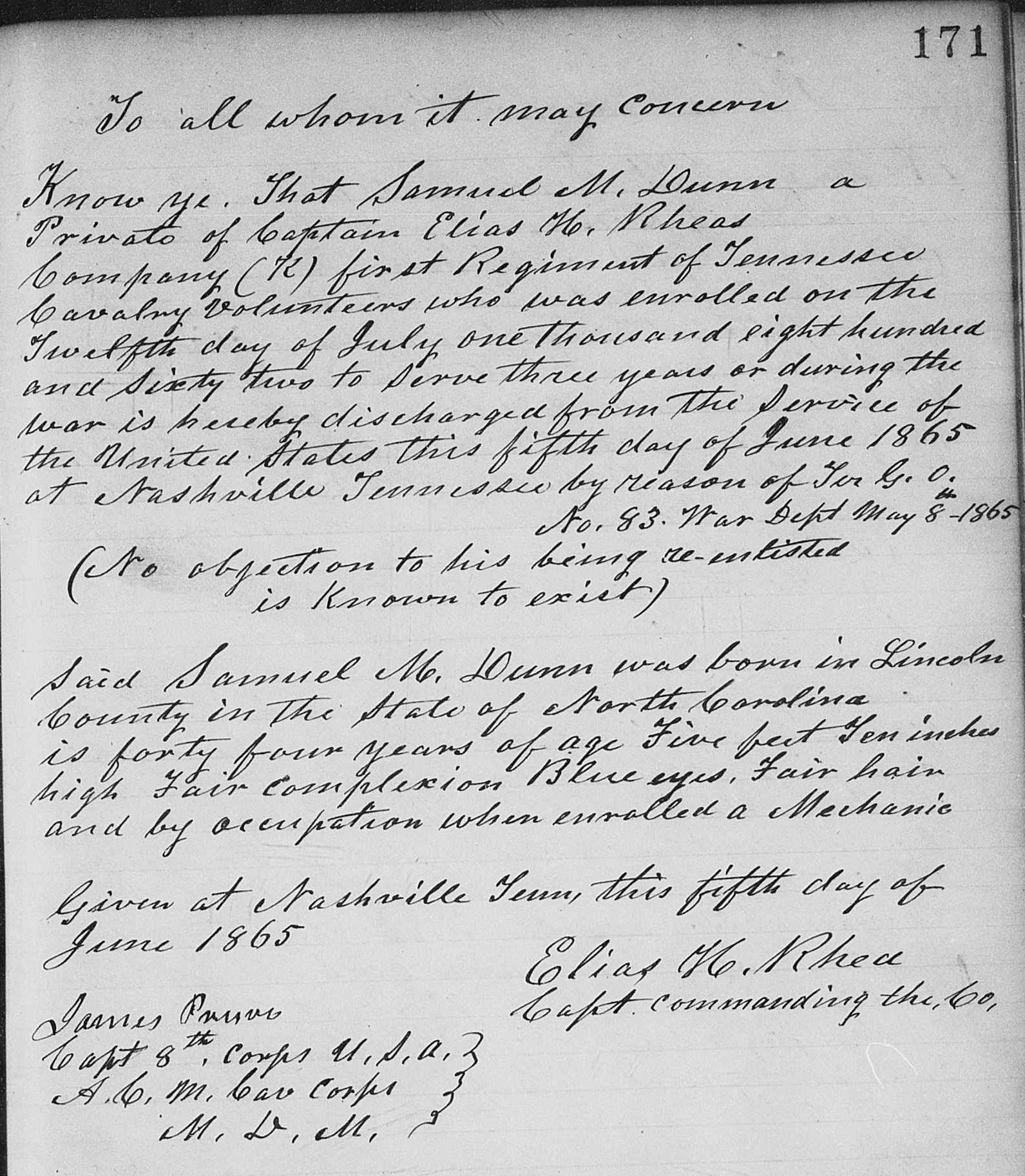
8. Discharge Papers and Service Termination Records
When a soldier left the military, he received paperwork documenting his service. For twentieth-century veterans, this is the DD-214 (Report of Separation), which has been the standard discharge document since 1950. Earlier equivalents include the WD AGO 53-55 forms used during World War II and various discharge certificates dating back to the Civil War. These documents typically record the veteran’s name, rank, dates of service, units, decorations, and the character of his discharge.
What many researchers don’t realize is that these records often exist in more than one place. Veterans were encouraged to file copies of their discharge papers with their county clerk or recorder of deeds, and many did. This is critically important because the 1973 fire at the National Personnel Records Center in St. Louis destroyed an estimated 16 to 18 million Army and Air Force personnel files, primarily covering the period from 1912 to 1964. If your ancestor’s federal records were lost in that fire, a county-filed copy of his discharge papers may be the only surviving documentation of his service.
County-filed discharge records are also easier to access than federal records in many cases. They are public records (though some states have restricted access to protect veterans’ personal information), and they can often be obtained with a simple request to the county clerk’s office. Some counties have digitized these records or transferred them to state archives.
For conflicts before the twentieth century, formal discharge certificates are less common, but they do exist. Civil War soldiers sometimes received individual discharge papers, and these occasionally turn up in pension files, family collections, county courthouses, or state archives. If your ancestor applied for a pension, his discharge paperwork (or a reference to it) may also appear in the pension file.
Where to look:
- Start with the county courthouse or recorder of deeds in the county where your ancestor lived after his service.
- For federal records, submit a request through the NPRC using Standard Form 180. Next of kin can request a full copy; other requesters may receive a limited response due to privacy restrictions.
- Beneficiary Identification Records Locator Subsystem (BIRLS) files may also contain discharge papers, but the VA is now refusing to release these records in response to FOIA requests.
- For Civil War-era discharge papers, check NARA, state archives, and the veteran’s pension file.
Wrap Up: Honoring Their Service Through Research
Military records do more than document the fact that an ancestor served. They tell us what that service looked like: where he went, what he endured, who he served alongside, and how the experience may have shaped the rest of his life. Every record type on this list has the potential to turn a single line in a census or a name on an index card into something much deeper and more human.
If you’ve found a draft card or a basic service record for an ancestor and stopped there, consider this your invitation to keep going. Request the pension file. Look for the unit history. Check the county courthouse for a filed discharge. The records are out there, and the stories they contain are worth the effort.
Have you found a surprising military record for one of your ancestors? Tell us about it in the comments!


This post contains affiliate links. I may receive a small commission if you choose to make a purchase, but it does not add anything extra to the price you pay. For more, please read my full Disclosure Statement. I appreciate your support!